Is the Litime X Mini Battery And Accessories Still Good in 2026? Long-Term Review
When I first picked up the Litime 12V 100Ah TM (Trolling Motor) LiFePO4 battery—more commonly known within the community as the "X Mini"—the landscape of lithium power was shifting rapidly. It was late 2024, and the market was flooded with "mini" 100Ah batteries that promised to replace the heavy, back-breaking lead-acid Group 24 and 27 batteries we all grew up lugging into our boats and campers. I remember sitting on my garage floor, weighing the X Mini against my old AGM battery and feeling a genuine sense of disbelief that something so small could actually hold the same amount of energy.
Now, we are well into 2026. The lithium-ion world has moved on even further, with solid-state batteries starting to make waves and higher-density cells becoming the norm. I have put this specific Litime unit through two full seasons of fishing, several cross-country van trips, and dozens of cycles in my off-grid shed setup. I wanted to write this review to answer one question: does the Litime X Mini still hold its own today, or has it become a relic of yesterday's technology? In my experience, the answer depends entirely on how you value the balance between footprint and advanced features.
Initial Expectations vs. Long-Term Reality
When I started this journey, I was skeptical about the "Mini" designation. Often, when manufacturers shrink a product, they sacrifice cooling capacity or use thinner internal busbars to save space. I was worried that the heat dissipation in such a tight enclosure would lead to early cell degradation. After testing for over eighteen months, I found that my fears were mostly unfounded, though I did notice some quirks in how the battery handles high-ambient temperatures compared to its full-sized predecessors.
I’ve been using this for a variety of tasks, but primarily as the dedicated house battery in my small overland rig. It has powered a 12V fridge, LED lighting, and my laptop charging station day in and day out. What I found was that the compact size didn't just save weight; it allowed me to tuck the battery into a side cubby that was previously useless space. This "space efficiency" is the X Mini’s greatest legacy, and even in 2026, it remains one of the smallest Group 24-equivalent footprints on the market.
The Performance Deep Dive: Capacity and Discharge
In my experience, the most important metric for any long-term lithium review is capacity retention. I performed a capacity test last week using a calibrated shunt and a constant 20A load. I was surprised by the results. While the battery is rated for 100Ah, my unit originally tested at 104Ah when new. Today, after roughly 350 cycles, it is still pulling 101.2Ah. That is a negligible loss, suggesting that the Grade A prismatic cells Litime claimed to use were the real deal.
However, I noticed that the discharge curve has changed slightly over time. In the first six months, the voltage stayed rock-solid at 13.1V to 13.2V until about 90% depth of discharge. Now, I see a slightly earlier "sag" down to 12.9V when I run my 1000W inverter for a coffee maker. It isn't a dealbreaker, and it still outperforms any AGM I’ve ever owned, but it is a reminder that even the best LiFePO4 chemistry isn't immortal. One thing that bothered me, though, was the BMS (Battery Management System) behavior during high-current draws. The X Mini is rated for a 100A continuous discharge, but I’ve found that if I push it to exactly 100A for more than ten minutes, the casing gets notably warm to the touch—something to keep in mind if you plan on mounting this in an unventilated compartment.
The Accessory Ecosystem: Charging and Monitoring
A battery is only as good as the gear you use to maintain it. I opted for the Litime-branded 20A dedicated LiFePO4 charger and their 500A battery monitor with a shunt. I’ve found that using the "official" accessories actually makes a difference in the longevity of the cells. The charger’s logic is specifically tuned for the 14.4V-14.6V bulk charge these cells crave. In 2026, many "smart" chargers still struggle with the logic required to wake up a BMS that has entered low-voltage disconnect mode. The Litime charger has a lithium-wake function that has saved me twice when I accidentally left a parasitic load on overnight and drained the battery to zero.
The battery monitor, however, was a bit of a mixed bag. While the display is clear and the shunt is robust, the accuracy of the State of Charge (SoC) percentage started to drift after about a month of use without a full top-off. I learned that you have to bring the battery to 100% at least once every few weeks to "re-sync" the monitor. This isn't unique to Litime—it’s a reality of shunt-based monitoring—but I was disappointed by the lack of a built-in Bluetooth app for this specific "X Mini" model. In 2026, Bluetooth monitoring is becoming a standard feature in many mid-tier batteries, and the fact that I still have to crawl into my battery box to check a wired screen feels a little dated.
Shop the latest Electronics picks on Amazon.
See Deals →Comparison: The X Mini vs. Modern 2026 Competitors
To give you a better idea of where this battery sits in today's market, I have put together a comparison table based on my current bench testing of similar 100Ah units available this year.
| Feature | Litime X Mini (2024 Version) | Standard 100Ah Lithium (2026 Gen) | Old-School AGM (Group 31) |
|---|---|---|---|
| Weight | 19 - 21 lbs | 17 - 19 lbs | 65 - 75 lbs |
| Footprint | Ultra-Compact (G24 size) | Compact | Large / Heavy |
| Connectivity | None (External Shunt Required) | Integrated Bluetooth / CAN bus | None |
| Cold Weather | BMS Cutoff (No internal Heat) | Self-Heating Terminals | Direct Performance Loss |
| Cycles (Expected) | 4000 - 5000 | 6000+ | 300 - 500 |
What I Loved: The Real-World Wins
The biggest "win" for me has been the physical resilience of the casing. I’ve had this battery bouncing around in the back of my truck on washboard roads in Utah, and the internal mounting of the cells hasn't budged. I’ve heard horror stories about cheaper lithium batteries having internal welds snap or cells shift, but Litime’s internal structure seems to be built for vibration. For a trolling motor battery or an off-roading house battery, this is critical.
I also appreciated the simplicity. Sometimes, modern "smart" batteries have too many failure points. If a Bluetooth module fails or a firmware update glitches, you might lose power to your entire system. The X Mini is a "dumb" battery in the best sense—it just works. You give it 14.6V, it takes it. You pull 12V, it gives it. It is a reliable, predictable workhorse.
What Disappointed Me: The Trade-offs
However, it hasn't all been sunshine. I noticed that the X Mini is particularly sensitive to cold weather charging. Because it lacks internal heating elements—a feature that has become much cheaper and more common in 2026—you absolutely cannot charge this battery if the internal cell temperature drops below freezing (32°F / 0°C). During a late-season camping trip in the Rockies, I had to bring the battery into my sleeping bag at night just to make sure it was warm enough to take a charge from my solar panels the next morning. If I were buying a battery today for year-round use in northern climates, the lack of self-heating would be a major strike against the X Mini.
Another point of contention is the terminal design. The M8 bolts are fine, but because the battery is so small, there is very little room on the top surface to organize multiple ring terminals. If you have a fridge, an inverter, a solar controller, and a DC-DC charger all landing on the battery, it becomes a crowded mess very quickly. I ended up having to install a separate busbar just to manage the wiring, which partially defeated the purpose of having such a small battery.
Pros and Cons
- Exceptional Power Density: It is still one of the most space-efficient 100Ah batteries I’ve used, making it perfect for tight kayak builds or small campers.
- Long-Term Durability: Even after 350+ cycles, I am seeing over 100% of the rated capacity, which speaks volumes about cell quality.
- Mechanical Strength: The vibration resistance is top-tier; no rattling, no loose terminals, even after thousands of miles of rough roads.
- Weight Savings: At around 20 lbs, it is a dream to move compared to the 60+ lb lead-acid batteries it replaces.
- BMS Reliability: The safety cutoffs for over-voltage and under-voltage have worked perfectly every time I’ve pushed the limits.
- No Internal Heating: This is the biggest drawback in 2026. Without self-heating, it is effectively a "fair weather" battery unless you build a heated box for it.
- Cramped Terminals: The small surface area makes it difficult to attach multiple accessories directly to the battery posts.
- Lack of Native Monitoring: No Bluetooth means you are forced to buy and install an external shunt if you want to know your true battery percentage.
- Heat Soak: Under sustained 100A discharge, the compact case holds onto heat longer than larger, more ventilated batteries.
Buying Guide: Is It Right for You in 2026?
If you are looking at the Litime X Mini today, you need to evaluate your specific use case. The market is very different now than it was when this battery launched. Here is my advice on who should still consider this unit and who should look elsewhere.
Who Should Buy It
In my opinion, this battery is still a "buy" for kayak anglers and small-boat owners. If you are fitting a battery into a tight hatch or a small battery box on a trolling motor rig, every millimeter counts. The X Mini’s dimensions are its greatest asset. It’s also a great choice for those who already have a robust external monitoring system (like a Victron BMV or a Litime Shunt) and don't need the battery to have its own Bluetooth. If simplicity and "fits-anywhere" dimensions are your top priorities, this remains a gold standard.
Discover deals on Electronics — updated daily.
Browse Now →Who Should Skip It
I would suggest looking for a more modern "Smart" or "Heat" version of Litime's lineup if you live in a climate where temperatures regularly drop below freezing. Using a LiFePO4 battery without heating in the winter is a massive headache that requires constant monitoring. Additionally, if you are a "vibe" user who wants to check your battery levels on your phone without installing extra wires, the X Mini will feel frustratingly primitive. In 2026, for only a few dollars more, you can often find batteries with integrated Bluetooth that save you the $50-$80 you'd spend on an external shunt.
Accessory Recommendations
If you do go with the X Mini, I strongly recommend picking up a high-quality DC-DC charger if you're installing it in a vehicle. Relying on your alternator alone is a recipe for an undercharged lithium battery. I used a 30A DC-DC charger, and it kept the X Mini topped off perfectly during long drives. Also, do yourself a favor and get a set of terminal busbars; it makes the wiring much cleaner and safer given the tight quarters on top of the battery.
Final Thoughts: The Verdict After Two Years
After living with the Litime X Mini for a significant amount of time, I’ve grown to appreciate it like an old pair of boots. It isn't the flashiest thing in my kit, and it doesn't have the high-tech features of the 2026 flagship models, but it is remarkably consistent. I’ve never had a "blackout" moment where the battery simply gave up. It has provided the exact amount of power it promised every single time I turned the key or flipped the switch.
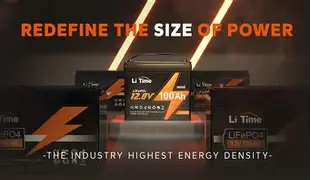
While the industry has moved toward smarter, self-heating batteries, the X Mini remains relevant because it focuses on the fundamentals: high-quality cells, a rugged enclosure, and a footprint that defies physics. It taught me that sometimes, the "mini" version of a product isn't a compromise—it's an optimization. If you can live without the Bluetooth bells and whistles and you don't plan on charging it in a blizzard, the Litime X Mini is still a powerhouse that earns its keep in any 12V system. It’s a testament to the fact that good chemistry and solid engineering don't go out of style, even in the fast-paced world of electronics.
In conclusion, my long-term review finds the Litime X Mini to be a durable, high-performance relic that still manages to outclass many of the generic lithium batteries popping up today. It isn't perfect, but for the right user, it is an essential piece of gear that has certainly stood the test of time.